
Inflation Reduction Act and Prevailing Wage Requirements
Apollo Energies helps property owners, developers, and facility managers understand how energy audits, energy modeling, and retrofit planning can support incentive qualification.
What You Need To Know
-
Meeting Performance Targets (Without the Administrative Red Tape)
While Section 45L references ENERGY STAR baselines, claiming the $2,500 tax credit does not require full, formal EPA registry certification. In reality, your project simply needs to meet the core performance metrics and prescriptive building envelope measures tied to the 2012 IECC standard.
If you do want to get the $5,000 tax credit with Zero Energy Ready, then you will need to get ENERGY STAR certified. However, the Big Beautiful Bill repealed the tax credits effective June 30, 2026
Our EcoAudit® software removes the compliance bottleneck. By evaluating your insulation layers, windows, and mechanical equipment against true building-science indexes, we generate the data models an independent certifier needs to secure your credits without unnecessary operational delays.
-
Prevailing Wage Guardrails (Maximizing Your Incentive Multipliers)
To secure the peak values of Section 45L multifamily credits and Section 179D commercial deductions, project teams must strictly comply with task-based prevailing wage and apprenticeship parameters. Because these audits are evaluated by specific local labor classifications, keeping accurate records manually is a significant operational risk.
Apollo Energies eliminates this compliance headache. Our EcoPlatform™ engine embeds local wage determinations natively, providing facility managers and developers with an unalterable project record that verifies contractor hours against required baselines before the June 30, 2026 program sunset .
✓ Streamline your prevailing wage documentation -
How To Qualify for Section 45L Credits (Securing Missed Capital)
Section 45L provides substantial per-unit tax credits for residential projects hitting strict performance markers. Under the latest tax adjustments, units must have been first sold or leased before June 30, 2026 to remain eligible under this active framework.
If you missed claiming these credits on properties completed over the last three years, the window to act is still wide open. We deploy EcoAudit® to analyze your historical physical layouts, producing the building-science certification files required to amend your 2023–2025 returns and unlock frozen cash flow.
✓ Find out if you qualify for 45L tax credits -
Multifamily Property Incentives (Up to $5,000 Per Unit)
Multifamily developments represent some of the highest potential yields under the Inflation Reduction Act]. By integrating building-performance analysis with prevailing wage standards, developers can scale their tax relief up to a full $5,000 per dwelling unit.
Our revised virtual audit frameworks process whole-building spatial data automatically. EcoPlatform™ compiles structural blueprints and insulation parameters to quickly calculate energy savings models, enabling developers to capture max-tier incentives across an entire portfolio with zero engineering bottlenecks].
✓ Get a tax credit up to $5,000 per unit -
DOE Efficient New Homes (The $5,000 Zero Energy Ready Successor)
The Inflation Reduction Act expanded Section 45L to reward homebuilders hitting top-tier performance tiers with a massive $5,000 per unit tax credit. Under the Department of Energy’s framework, this requires certification under the *DOE Efficient New Homes* program (the formal successor to the Zero Energy Ready Homes guidelines).
While the One Big Beautiful Bill Act sunsetted this track for newly completed assets acquired after June 30, 2026, developers have an immense window to capture missed capital. If your single-family or multifamily builds qualified between 2023 and mid-2026, EcoAudit® can run historical envelope models to compile the precise certification records needed to file retroactive amendments.
✓ Find out more about DOE Efficient New Homes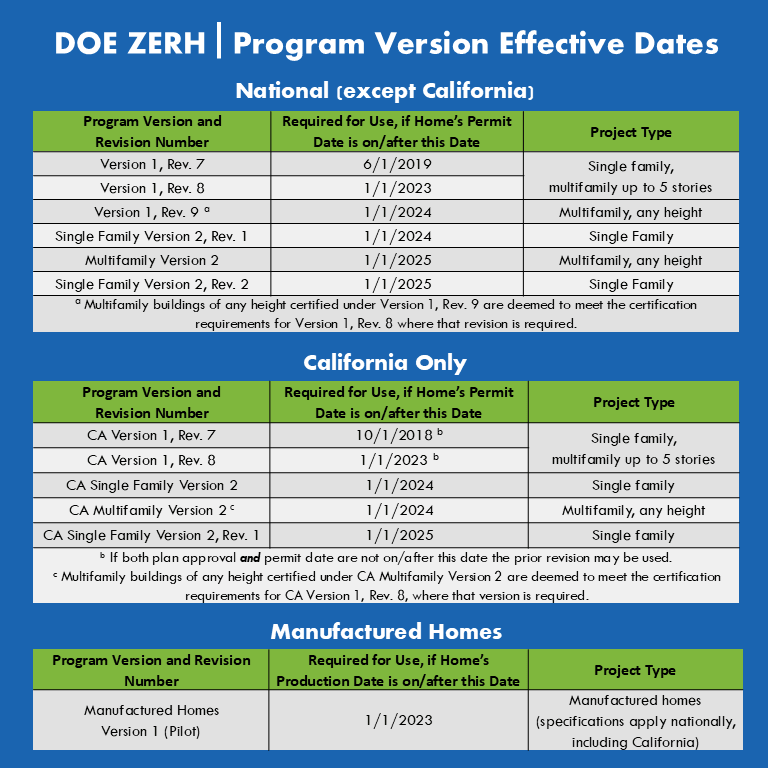
-
Residential Upgrades & 25C Credits (Immediate Home Bill Relief)
You don’t have to keep overpaying on your monthly utility bills due to drafty rooms or aging mechanical envelopes. Residential energy upgrades provide a clear pathway to reduce localized grid strain while radically improving daily home comfort.
By taking advantage of our flat-fee $299 Virtual Home Energy Audit, homeowners receive a step-by-step performance blueprint. We automatically map your physical insulation levels, windows, and heat pump specs to the Section 25C framework, securing up to $1,200 annually in direct, ongoing federal tax credits.
✓ Explore flat-fee virtual home audits -
Commercial Real Estate & Section 179D (Deductions Up to $5.94/Sq. Ft.)
For corporate facility managers, multifamily developments over 4 stories, and high-occupancy hotel operators, Section 179D represents the single largest tax shield for core building upgrades. By modernizing lighting profiles, HVAC systems, or building envelopes, properties can unlock substantial deductions adjusted up to $5.94 per square foot for inflation.
The One Big Beautiful Bill Act explicitly bars projects starting construction after June 30, 2026 from claiming this deduction. However, utilizing a Form 3115 Look-Back Study, our platform allows you to perform retroactive evaluations of your portfolio. Because our billing scales directly by total square footage, your upfront evaluation cost is a predictable, nominal fraction of the locked liquidity we return to your balance sheet.